About
Shyam Ranganathan
CEO, Philosopher, Scholar (MA, MA, PHD), Author, Translator, Teacher, Coach
I treat philosophy as a practical discipline of reasoning that explains why people get stuck in thought and action—and how clarity, agency, and responsibility can be rebuilt.
Before I became a CEO, and an entrepreneur, I was, and continue to be, a philosopher, researcher, and coach. I think the best teachers are those who never stopped being students, and a researcher is a student when there’s no one there to teach them.
I have held research, teaching, and professorial positions at the University of Toronto and York University, where I have been a member of the Department of Philosophy, and continue at the York Centre for Asian Research.
Stay on this About page for the more user-friendly version of Dr. Shyam
If you want more of the gory details, you can choose from the menu 🙂
I am a teacher, and so if you keep scrolling, I promise to teach you something !


A central focus of my research has been how to conduct successful inquiry in any subject, and philosophy in particular. Surprisingly, no one had specified in any systematic way how we can learn and study the options of philosophy from any culture or context, and so I made that the point of much of my early work. The results were simple procedures that can be applied to a wide range of life contexts. As I refined this work and implemented it more deliberately in my teaching, an unexpected pattern emerged: students, unprompted, reported significant increases in their capacity to think clearly, make independent choices, and energetically execute choices without internalized resistance. These changes were not the result of motivation or emotional support. They came about by an increase in personal strength by using philosophical skill in life.
After more than twenty years of this work, I founded Φ Philosophit™, a coaching platform grounded in philosophy. Just as physical fitness training develops bodily strength in the athlete, Phitness training develops agency and effective autonomy in the Life Athlete. Phitness consists in clear thinking, free choosing, and the energetic implementation of success. Like physical training, it is practical and demanding: it involves repeated challenges, controlled failure, recovery, and a return to the task. The result is increased personal strength and autonomy.
Φ Philosophit™ is not counselling or therapy. Unlike most coaching programs, which borrow loosely from psychology and treat people as passive recipients of support, Φ Philosophit™ is based on philosophical skill. It draws on more than 3,000 years of philosophical research from the Western, Chinese, and Indian traditions and operates on a simple premise: enduring success requires the ability to think clearly for oneself. Academic philosophical learning over the long term yields Phitness as an inconsistent side effect. Φ Philosophit™ is designed to train these skills in a short amount of time: months, not years. We can accomplish this by the positive inculcation of skill that also doubles as a negative, decluttering of internalized obstructions.
For more information, visit philosophit.com.
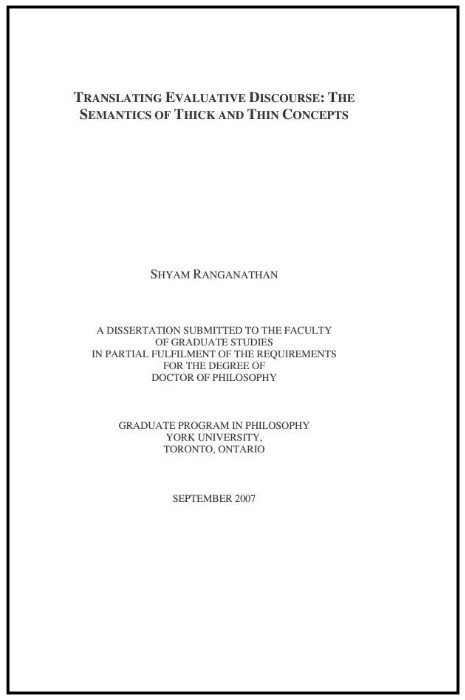
My research in Yoga began after my MA in South Asian Studies, which focused on the history of Indian philosophy. While completing a PhD in philosophy on the topic of translating moral philosophy, I chose to translate the Yoga Sūtra
(the basic text of the Yoga tradition) as a side project. The rest is history. The classical philosophy of Yoga had a transformative impact on how I thought about research problems. From there I learned that we ought to clearly distinguish thinking as a responsible approach to data from various ways we can relate to thoughts emotionally.
In time I noticed that there were no reliable sources of understanding of Yoga’s basic philosophy available online, as most of what is said about the topic originates from authors who lack training and competence in philosophy and the necessary specialization in translation to unlock the ancient wisdom. Also, most of what people believe they know about Yoga has to do with how the understanding of yoga shifted to accommodate oppression over a thousand years of colonization. So instead of learning about the original moral and transformative practices of Yoga, they learn about coping mechanisms for the trauma of oppression.
So I started the 🟔Yoga Philosophy Institute in 2019, to make research-based knowledge of Yoga’s intellectual roots available to all who have an interest in Yoga.
For more, see yogaphilosophy.com

A Love of Philosophy As Essential Life Practice
Children are natural-born philosophers. They ask questions. They want to know why. They don’t often happen with stories that don’t make sense, and they can often notice inconsistencies. Children could be taught basic logic, a core competence of philosophy, as they are taught math. It could be part of the basic skills of literacy, as they learn their 1,2,3s. The one catch, however, is that to teach logic is to show that a good argument is not the same as the facts or what one believes. And then it would be a lot harder to produce generations of people who have internalized the beliefs of their elders and assumed that the facts of the world have to be revered as nothing that can be criticized. Indeed, if we taught logic and philosophy to children, we would end up producing adults who are difficult to manipulate with opinions and facts of the world we live in (facts largely created by shortsighted actors who themselves didn’t engage in reasoning). I wonder why we’re not teaching kids philosophy?
As an aspiring student of philosophy, I loved that every topic was only intelligible as a debate amongst competing positions, and learning philosophy was about learning about disagreements that operate at high levels of abstraction but have important consequences and implications for a variety of areas of life. Ordinary folks have outlook philosophies, which are ways of looking at things. The philosopher is someone trained in the discipline of philosophy, which is where we rigorously analyze and study competing outlook-philosophies. The benefit of philosophy is that it frees us from uncritical assumptions and biases and opens us up to genuine solutions to genuine problems. On a personal level, these same skills form the basis of what I call Phitness. They allow individuals to clear up their thinking by reasoning, which allows them to assess a wide range of options. And having self-decluttered uncritical assumptions and biases, they have the skills to personally reinvent themselves and create successful and fulfilling lives.

My research in philosophy began in my South Studies MA when I took on the demonstrably false view, held by pretty much every scholar in the field, that Indian philosophers were uninterested in practical ethical questions. This is a view that is sustained by not using basic procedures in learning philosophy to these South Asian sources.
In my PhD in philosophy, I created a solution that explains how translation on any topic, including ethics, can be successful. This was work largely in Analytic philosophy of language and ethics, but also Translation Studies.
This allows me to draw on philosophy from all three major, ancient traditions (The Western, the Chinese, and the Indian) and to think about solutions to problems on a global scale, which mirrors the life challenges each one of us faces.
To find out about my areas of expertise, click here.
My Work Shows That Philosophy is Objective Because I Focus on the Basics
My work as a philosopher is unusual in treating the pedagogy of philosophy as the rigor and skills we need to solve philosophical problems. These problems of philosophy are objective (not a matter of opinion), and their solutions are also objective (not a matter of opinion). Usually, philosophers treat learning philosophy as a mere preparation for a philosopher to move on to a specialized project, and the skills necessary to learn philosophy play no role in proposed solutions. I show in my work that this is an error that leads to lots of problems. As research is simply learning where there is no one to teach, my approach radicalizes philosophy learning as a research methodology. If we understand it well enough, we can use it to learn philosophy from any culture, any language, and any tradition. And this helps us appreciate the ways in which the questions and answers of philosophy are not about culture, language, tradition, or the biases of your context. The solutions to philosophical problems have to do with taking the learning process of philosophy to its end. The problems that this methodology solves are core questions in ethics or moral philosophy (questions of right choice or good outcome), reality (metaphysics) knowledge (epistemology), reason (logic) and various related topics.
The rigor and analytical focus of philosophy are usually front and center in philosophy pedagogy. These standards, at the very least, require students to distinguish their opinions (what they take to be true), and even the actual facts of the world, from the arguments of the philosophers they are studying. Arguments are not opinions, and they are not necessarily facts: they are reasons for conclusions. And this focus on arguments shows that a good reason-based explanation is not the same as our opinion or what is true. And yet, what we find in high-status philosophy in the Analytic and Continental traditions often flagrantly violates these standards by conceiving of successful explanation in terms of what the philosopher takes to be true. This is a tendency in the Western tradition that goes all the way back to Plato. And in this switch from the rigors of learning philosophy to providing philosophical explanation in terms of what the philosopher perceives as true from their elevated vantage, philosophy is depicted as a subjective enterprise that depends on the subjectivity of the philosopher (or, sometimes, the intersubjectivity of shared practices). Famously, philosophy is also depicted as being able to help every other discipline, but it can’t solve its problems because, perhaps, it has no real content. It’s where people talk about problems before they can create a science to deal with them. And certainly we have historical evidence of that: natural philosophy was philosophy before it was empirical science. Psychology was something philosophers fussed about before the development of empirical psychology.
Whereas science and math can engage in some type of objective demonstration of what is correct, philosophy is depicted as unable to engage in such a demonstration, as it’s all about the perspective of the philosopher.
This is an illusion created by thinking that the philosopher has outgrown the basics of learning philosophy.
My main criterion for good research in philosophy is that it should not involve any element (propositional attitudes or appeals to facts) that would impede our ability to understand a philosophical proposal.
My core project since I was a graduate student has been to account for how we can learn philosophy from any tradition, any culture, and any language. I have found this to be the most expeditious way to get to the objectivity of philosophy, for it forces us to understand the discipline in ways that transcend our language and culture and what we take to be true—or even what is true. Most philosophy is probably false (it can’t all be true as it is contradictory), and yet it’s worth learning. Philosophy isn’t just some caretaker of gestating sciences. It has core questions in metaphysics (reality), epistemology (knowledge), logic (reason), and ethics (right choice or good outcome), the nature of thought, and explanation. And in my work I show that if we take these pedagogical constraints on learning philosophy from any source seriously, we have the tools we need to figure out what is objectively true in philosophy, including moral philosophy. But this is something we discover by research. It’s not intrinsic to the vantage of the philosopher. For many, what we discover is surprising, and for those who are attached to their subjectivity as a means of doing philosophy, it’s aggravating and embarrassing.
To get to the basics of learning philosophy as a way to conduct research in philosophy and to solve problems in philosophy should sound like a no-brainer. Research is just a kind of learning we do when there’s no one there to teach. And so my approach is to apply the same types of skills that philosophy professors mentor their students in to solve the outstanding problems of philosophy.
But why does this lead to breakthroughs in so many areas? There are a couple of reasons. First, philosophy as an exercise of finding reasons as justifications and explanations for conclusions tends to blow up: the moment you find reasons for a conclusion, they are each of them a conclusion that requires further reasoning, and so on.
Secondly, to really get to the basics of learning philosophy, we have to not allow language, culture, tradition, and our biases to get in the way of asking the questions and finding answers. And hence, for me to really see this through, I had to find solutions to learning philosophy in translation. And this problem of thinking about philosophical questions and answers as something that isn’t about any particular language or culture has a way of showing answers to outstanding philosophical questions, answers that would simply be missed if we raised them from within a specific tradition, culture, or language.
The upside of this type of work is that you don’t have to expect anyone else to take your word for it. Because it’s all based on what we need to learn philosophy, it’s something that can be taught as part of learning philosophy.
First, in order to understand how we can learn philosophy from any place, time, or culture, I had to explain how we could translate anything successfully, and then specifically how we could translate philosophy successfully.
To get this account off of the ground, I had to innovate and move past what is usually assumed in the Western tradition. The basic assumption of the Western tradition is that thought (what can be true or false) is linguistic meaning. I call this theory LAT. According to LAT, if you are translating thoughts from one language to another, you are translating linguistic meaning. The problem is that because languages are different, this way of thinking about translation is doomed: it’s really difficult to specify how different languages can have sentences that share exact meanings.
In order to solve this problem, I had to arrive at a non-linguistic account of meaning and thought (LE). This was new. But it was one that was suggested by the best practices in translation studies.
Once I did this, I had a way to learn philosophy from other traditions, which were not gatekept out of the conversation because they were not in keeping with the language and culture of the Western tradition.
Then, I reflected on the basic practices of philosophical pedagogy: this involves teaching students to explicate—render explicit the reasons for conclusions that philosophers promote. And so I formalized this as a research methodology (explication). And what I found was that for any area of philosophy, I could use this to arrive at, via logic, and bypassing my or anyone’s opinions, what philosophers were disagreeing about: and that was the basic topic in that area of inquiry.
But then, I saw, if I can do this, I have a way to figure out what is the objectively true answer to any debate in philosophy: it’s what explains the disagreement. And this generalizes.
Think about physics. Physics has produced quantum mechanics, which explains how things work at a very small scale, and general relativity and Newtonian physics, which explain large-scale happenings. They don’t agree. So they are all indicating that there is something objective, outside of their theoretical perspectives, that is the topic of debate. Whatever physics theory can explain how the same physical reality, that all of these theories are disagreeing about, can appear in different ways so that at the small scale it looks like quantum mechanics, at the medium-speed scale it looks as Newton describes it, and then when we increase scales in speed, Einstein’s relativity seems to be the right account, will be the objectively true theory of physics.
Same for all the disagreements of philosophy.
But, since I already specified the tools we need to understand the debates of philosophy, I had the bare ingredients to create explanations of how the same thing can look differently from differing perspectives, and that has to do with the possibilities of philosophical disagreement.
And once I was at this level of generality, there were lots of further implications for other topics of philosophy, such as the philosophy of religion, race, artificial intelligence…
What this process has taught me is that many of the assumptions that we live with in a world created by Western colonization reflect LAT and its rollout as a way of thinking about explanation. This has profound implications for the kinds of answers we can objectively arrive at in philosophy. They are going to be decolonial but also move away from other implied biases of LAT, specifically its anthropocentrism and communitarianism.
moral philosophy, metaphysics, epistemology, philosophy of language, logic, translation, artificial intelligence, race, religion, Western philosophy, South Asian philosophy, and Chinese philosophy.
Academic philosophy—especially the technical variety I have written on—is often thought to be inaccessible and irrelevant to ordinary people, concerned as it is with specialist discourse.
Academic philosophy—especially the technical variety I have written on—is often thought to be inaccessible and irrelevant to ordinary people, concerned as it is with specialist discourse.
Academic philosophy—especially the technical variety I have written on—is often thought to be inaccessible and irrelevant to ordinary people, concerned as it is with specialist discourse.
Academic philosophy—especially the technical variety I have written on—is often thought to be inaccessible and irrelevant to ordinary people, concerned as it is with specialist discourse.
My Work Has Led Me to Write on and Help People with Life's Big Questions.
And the main one is...
My Work Has Led Me to Write on and Help People with Life's Big Questions.
And the main one is...
What Am I Supposed to Be Doing With My Life?
How Can I Live My Life In a Way that It Works For Me?
What Am I Supposed to Be Doing With My Life?
How Can I Live My Life In a Way that It Works For Me?
When we don't see the big question, it usually shows up in smaller instrumental concerns, such as
Money/Career: "How can I get this job I want?" "How do I increase my income?"
Relationships: "How do I create or maintain meaningful relationships?"
Health: "How do I Increase my Wellbeing?"
When we don't see the big question, it usually shows up in smaller instrumental concerns, such as
Money/Career: "How can I get this job I want?" "How do I increase my income?"
Relationships: "How do I create or maintain meaningful relationships?"
Health: "How do I Increase my Wellbeing?"
Solutions to these problems require work, just like learning to be physically fit requires work and repeated effort. That work has to do with controlled exertion that leads to fatigue, taking a break to recover, and getting back at it. It's a long-term project: it can't be done overnight. And as some evidence to how this plays out in life, please consider my story.
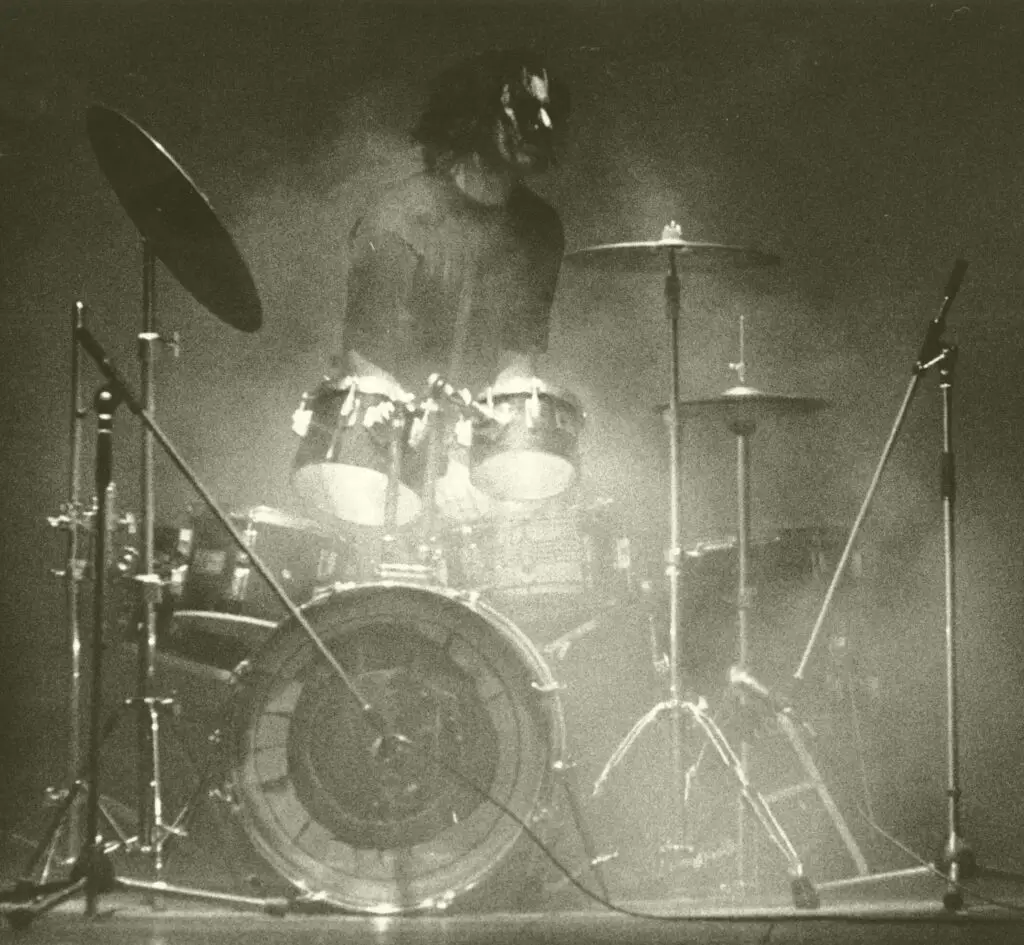
My life was characterized by an inversion. I had spent the first 25 or so years of my life trying to follow other people’s advice, starting with my parents, teachers, elders, you name it. I was surrounded by highly educated and highly successful people. I was the misfit: the gifted underachiever.
But as time wore on, I found that the only way that I could be successful by conventional standards was via self-destructive behavior. This led to a year of being drunk constantly and on prescription psychiatric medications treating a problem I didn’t have.
It almost killed me. And in a way I did die: the old me died. This was my second birth. What delivered me from this hellish womb was philosophy.
With this rebirth, I went from assuming that others actually knew what they were talking about to appreciating the ways in which most people, even highly educated and successful people, are prisoners to their beliefs, their outlook, and logical errors.
To find out more about my story, click here.
The positive lesson from my story is that we all need to develop our Phitness in advance of a crisis. And if we are in crisis, it's a good time to start.
The five critical lessons are:
First, people cling to their outlook as an explanation — what is often called “interpretation” in the literature.
Second, most people do not know why they are succesful. They typically tell a story they believe explains their success. But that story is almost always false, and crucially, not replicable.
Third, people routinely mistake symptoms for causes, because symptoms are what appear most immediately and most vividly.
Fourth, medical doctors, healthcare workers, therapists, coaches—and those who seek help from seemingly qualified professionals—are, with rare exceptions, guilty of the Ecological Fallacy. This is the invalid inference that moves from a strategy that has shown some level of statistical success to the conclusion that we should have the same confidence in its ability to help everyone, individually.
Fifth, people often claim, in the face of these criticisms, that "they were doing the best they can." That’s almost always false. It would have been better if they had just not interpreted.
What my work shows is that the big problems of the world are also the individual problems that we each have to deal with. There is no real conflict between self-interest and altruism: take care of yourself with Phitness and you improve life for others too.
The conflict between self and others arises by confusing your interests with what is not in your interest. This makes you partial, stuck in an outlook, and a problem for yourself and others.
The common thread running through these problems is that they all arise from treating an outlook or narrative as understanding. What replaces explanation is not reason, but adherence to a perspective.
Oppression occurs when an outlook is imposed on us—one we are required to conform to, resist, or perish under. If we do it to ourselves, the result is the same: we deny ourselves the freedom to explore options and choose for ourselves. And often, we enable external oppression by internalizing it as our way of operating.
Each of us is a person who must choose and act. People fail to thrive when their capacity to understand options and to choose freely is impeded. "Oppression" is the general name for this impediment.
That is why imprisonment, torture, deprivation, assault, and death are wrong: they are extreme limits on choosing and doing.
It shows up in a cluttered mind. When we do not put in the work to declutter our own minds, we self-oppress by constraining ourselves to our own point of view. And we hence internalize our own oppression, which limits our choices by constraining what we can think about.
Trauma. Often in these cases, the point of view we end up internalizing as our own is manufactured by the difficulties, abuse, or trauma we experience. When we then use this outlook created by abuse as our means of understanding, we impose those same difficulties on how we understand our options. Instead of solving problems, we become the problem.
My reserach especially on the ancient philosophy of Yoga, which is likely the first philosophy to diagnose the pathology of trauma and its solution, has positioned me as one of the few philosophers to provide continuing education support for Yoga therapy organizations. I have provided continuing education for the Center for Trauma and Embodiment. I was also the keynote speaker for the International Association of Yoga Therapists, where I presented reserach on Trauma and Yoga Therapy, and contributed to their publication on the topic.
So what's the answer to the question of what each of us should be doing with our life?
The answer is...
Phitness: Clearing our thinking (by logical skill) so we can choose freely and energetically implement our choices.
If we can think clearly, choose freely and act succesfully, we can as a matter of course solve our money, health and relationship problems.
And, we would thereby be putting a dent in the macro-scale challenges that are impeeding our success.
The idea that you have to ignore the big picture to work on the small stuff is confused. It’s the same problem, and the solution to both is the same: our Phitness.

Let’s go deeper. Here’s a crash course in logic. (This is the teaching I promissed).
Deduction is a kind of logic where some thoughts, or propositions (which can be true or false) function as premises for another thought/proposition, which is the conclusion. We say that such an argument is valid just in case:
if the premises are true, the conclusion has to be true.
Validity is not the same as the premises and conclusion being true.
Valid but All False: Good Reasoning
(1) The Sun is a ball of ice.
(2) Balls of ice are made out of coconut oil.
Therefore, the Sun is made out of coconut oil.
Invalid but All True: Bad Reasoning
(1) The sun rises in the east.
(2) January 1st is New Year’s Day.
Therefore, this is Shyam Ranganathan’s website.
Logical validity is a difficult idea for students to absorb because they have been rasied to think that something is "valid" if they agree with it. But in logic, it comes appart from our perspective.
To my knowledge, I am the only philosopher in the contemporary literature to make this point explicit: if we take reasoning seriously, we must give up trying to make sense of inquiry in terms of an outlook, beliefs, or even what is true.
If you don't, you will have to prefer the second argument, which is irrational, with claims that you believe, which are true, to the first argument that is rational, with premises that you disbelieve because they are false.
What this shows us is that making sense of anything by your outlook is irrational.
If we can reason, we transcend outlooks and allow ourselves to learn new options and increase our freedom of choice.
Given the review so far, outlooks have been faulted twice: when imposed, creating oppression, and when imposed, creating irrationality. This shows that oppression and irrationality come to the same thing!
That means, to get rid of oppression in the world and in our life, we have to work on our Phitness. Self-care and care for our world come to the same thing.
Ok, so you are still with me. That’s awesome! I want to share a bit more about my work, which is really important to understanding how we can move away from irrationality and oppression, which come to the same thing. I regard my mature work as depending on a distinction that I only became clear on around 2014, but I had employing in my research since graduate school. This is the distinction between Interpretation, and Explication.

Interpretation (Anti Logic)
When explaining the possibility of reasoning, it’s good practice to identify a thought or proposition, p, as something that can be true or false. And we can contrast this with propositional attitudes, like belief. To believe that p is to have the attitude that p is true.
There are other propositional attitudes too, like desire (wanting p to be true), or hope (optimistically awaiting p to be true). What is called "interpretation" in the literature to provide explanations in terms of one’s propositional attitudes like belief. When we interpret, we impose our belief or other propositional attitudes as knowledge.
Given that it would be irrational to choose the invalid argument with premises and a conclusion we believe, it will always be irrational to interpret. For when we interpret, we gravitate to what we are willing to endorse as true. And what is left out of this is reason.
Interpretation helps explain why well-educated people can nevertheless get things wrong. Educated people become irrational when they treat what they are exposed to in the process of learning as knowledge. But if knowledge is an exercise of reason, knowledge is something we generate by research, not by endorsing what we are familiar with.
This tendency is common within Western philosophy, where knowledge is often modeled in terms of propositional attitudes, such as belief.
Within this tradition, several influential Western philosophers argue that interpretation is necessary, such as W.V.O. Quine, Donald Davidson, Martin Heidegger, and H.G. Gadamer .
What is also generally not appreciated is that oppression, or the imposition of a perspective on people that they have to conform to, resist, or perish under, is an exercise of interpretation.
Explication(Logic)
Ok, you probably have heard the idea that moral questions are difficult to resolve and that they are subjective and culturally relative. You might have heard, in contrast, the idea that science is more reliable. One threat to science these days is that there are many people in power who want to interpret questions about whether Tylenol causes autism, for instance. They want their beliefs to be what is relevant to determining that question.
But we can avoid all of this confusion by being really explicit about how reasoning can be used in research. And we can use this to figure out objective answers to ethical questions or scientific questions. I call this "explication."
There are three steps to explication.
(1) Deductive logic renders explicit reasons for controversial conclusions about first-order options.
(2) Induction—the logic of generalizing from samples—helps determine the general topic of controversy by examining a sample of a representative sample of the first order disagreement.
(3) Inference to the Best Explanation (Abduction) discerns the explanation that accounts for the first-order disagreement.
This is a method of research applicable wherever controversy is possible. It allows us to arrive at objective answers—not based on our beliefs or outlook—about the controversy. And once we get to this point, we have reason to conclude what is objectively true: it consists of the integrated findings at all three levels.
All forms of reasoning move us away from trying to understand inquiry in terms of what we believe is true, or what seems true to us. We are able to reason insofar as we exercise the moral responsibility not to interpret. Not only does this three-step process show how we could determine objective answers to ethical questions (by identifying what would explain ethical disagreement), it also shows how a free, anti-oppressive world is needed for inquiry.

Explication as a research methodology is a way to apply the insight of the Jain parable of the Blind Men.
Several blind men, each touching a different part of an elephant, describe it differently: one calls it a snake (the trunk), another a wall (the body), and another a pillar (the leg). Each is convinced that his partial perspective captures the whole truth.
The lesson is not that all views are equally correct, but that no single perspective is sufficient to answer the question. To understand the elephant as it really is, the feelers must combine their observations.
In this way, the parable teaches intellectual modesty with respect to truth claims, tolerance, and the disciplined practice of integrating multiple viewpoints as a condition for grasping complex truth. And there are many other interesting South Asian models that help us make sense of this, such as the Conch (something completely asymmetrical, representing objectivity, beyond what can be observed from one perspective) and the Disk of Good Perception (self-knowledge as a matter of self-triangulating from differing times and spaces).


Irrationality tricks us into thinking that Reality is a Constraint on the Possible.
How many times have you been told to BE REALISTIC, and to stop daydreaming about things that are never going to happen?
When we are irrational, we begin by treating belief, truth-claims, and facts as settled—and we let them set the boundaries of the solution space. The facts are taken to decide the issue in advance. But solutions are not yet actual simply because they are true or factual; they only become real through implementation, and even then it can take time before meaningful change is observable.
When we are reasonable, we allow ourselves to untether imagination from what is already believed and from what is presently the case. We consider proposals, arguments, and theories as part of a genuine controversy about what we ought to do. And when we follow such inquiry to its explicatory end, we can have reason to change reality rather than merely accommodate it.
Part of the confusion at stake here is that reality includes both what is necessary and what is contingent. What is necessary is not up to us to alter, but what is contingent is—and there is no reason we cannot engage in that work. What prevents us from doing so is interpretation: the irrational tendency to treat the contingencies of our lives as fixed constraints, rather than as objects of inquiry that can be explained, revised, and transformed.

But Isn't Logic Really Difficult, Cold, Uncaring, Inflexible?
Before I became a philosophy professor, and before I wrote my PhD in philosophy, I was completely confused about logic. My lowest mark in my undergrad philosophy courses was in symbolic logic (I got a B). It was like math: lots of symbol manipulation. As someone with an undiagnosed learning disability (I have problems with reading) and who had untreated and profound ADHD at the time, I found it confusing. But that was because it was taught as though it was memorizing rules, not engaging in responsible behavior.
Reason, logic, is a choice to process information in a way that is never reducible to outlook. This frees you to be creative, to dream up new possibilities, and to be empathetic. Action based on this clarity lacks baggage, indecision, and residivism. Irrationality, by contrast, is difficult, cold, uncaring, and inflexible.
Reason, logic, is a choice to process information in a way that is never reducible to outlook. This frees you to be creative, to dream up new possibilities, and to be empathetic. Action based on this clarity lacks baggage, indecision, and residivism. Irrationality, by contrast, is difficult, cold, uncaring, and inflexible.
"But I feel stupid and kind of put off by all of this talk about Logic, Philosophy and oppression. I don't think I'm smart enough to follow or benefit. And I can't deal with big questions because I have my own personal problems to deal with."
Yes—because you have been trained to be afraid and confused about what is liberating. That is what oppression does.
Your problem's survival depends on the programing that makes you frightened of the solution.
Yes—because you have been trained to be afraid and confused about what is liberating. That is what oppression does.
Your problem's survival depends on the programing that makes you frightened of the solution.
Reasoning helps us work through information and proposals without having to agree with them. Basic logic (first-order, propositional calculus) could be taught alongside arithmetic. It is not any more difficult than learning to count and add. But the reality is that if students were taught to reason, they would not be so easy to manipulate and oppress. And so our education systems, which do not teach logic nor philosophy to children, are really designed not for their benefit but to make students easy to frighten and easy to manipulate. They grow up into adults that are easy to frighten and easy to manipulate.
Children are natural-born philosophers. By the time they reach adulthood, that has been scared out of them.I know this as a university professor who spent years teaching first-year, non-philosophy majors critical thinking. It was like pulling teeth, because they had been discouraged from thinking and largely programed to believe.
That is why I started philosophit.com to help adults develop these crucial life skills they have been deprived of.
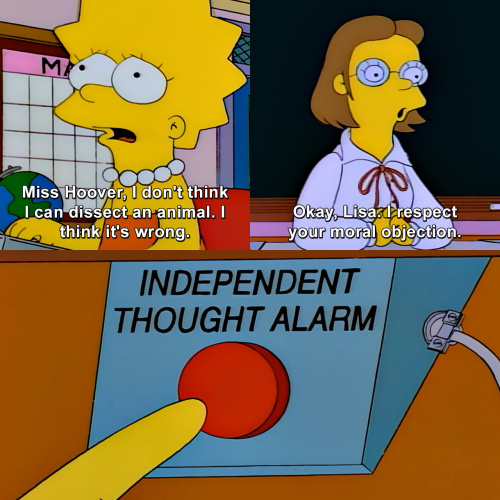
"But lots of people learn logic in university. That doesn't make them into transformed individuals."
The problem is, without getting rid of our interpretive predilections, our capacity to reason is limited. The world we live in encourages us to explain everything in terms of what we believe or is true. And what is true is oppression.
Most people underestimate how deeply our lives are shaped by a history of oppression and colonization. This is especially true of people who enjoy privilege and do not believe themselves to victims of colonization. These histories do not merely persist as past events; they establish social processes that reward people for interpreting the world in culturally approved ways, rather than for reasoning through it. When conformity of belief is rewarded, reasoning atrophies.
For this reason, it is not enough simply to learn how to reason. We have to expunge the junk and baggage of our minds, which have been deposited there by culture, upbringing, and "education."
Oppression and irrationality share a common structure. Both operate by imposing a perspective that those subjected to it are not permitted to question. Irrationality is not merely a private cognitive failure; it is the enabling condition of oppression. Where reasoning is suspended, domination becomes normalized. By contrast, the public practice of moral philosophy—when grounded in explication rather than interpretation—is incompatible with both irrationality and oppression.
These themes come together in my book Moral Philosophy and De-Colonialism, which argues that oppression is fundamentally a violation of reason, and that we therefore have a rational obligation to oppose it.
My research has also made clear that sharing books, articles, or formal arguments is not enough. As I noted in reflecting on My Story, it takes sustained work and practice. Just as physical fitness does not develop in a flash because you have been shown how to use gym equipment, personal strength does not develop in a flash because you understand the abstract outlines of explication.
This work has led me to appreciate how necessary such coaching has become. Even institutions devoted to reason, such as universities, have normalized interpretation at the expense of explication. If we are to build Life-Athletic strength—the ability to engage the world without submission to imposed perspectives—we will have to develop practices that our educational systems do not support in a world of oppression and colonization.

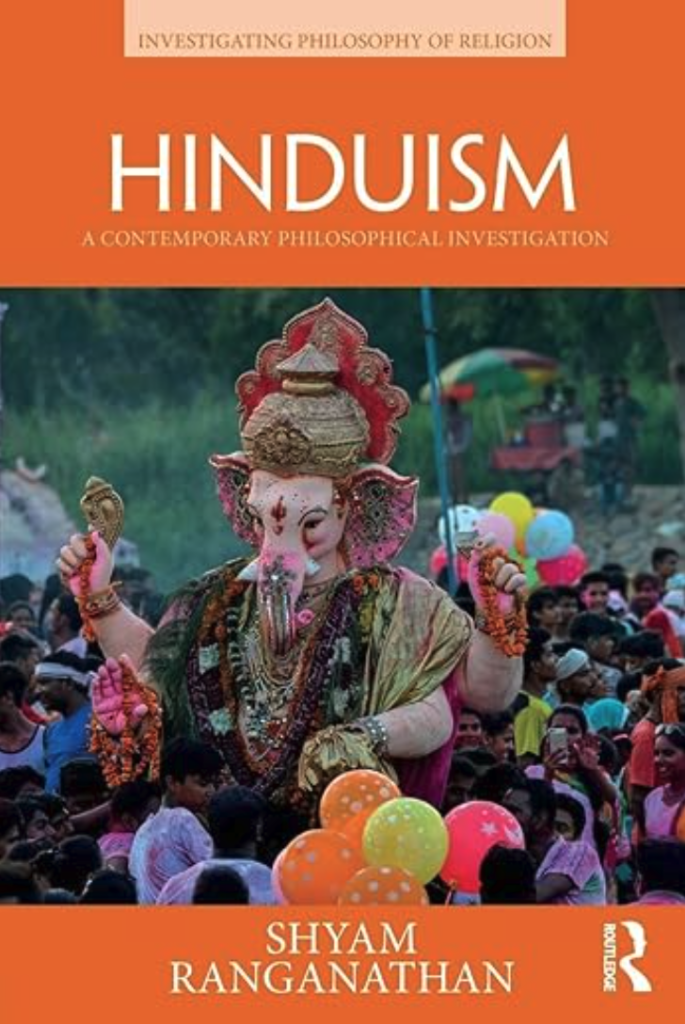
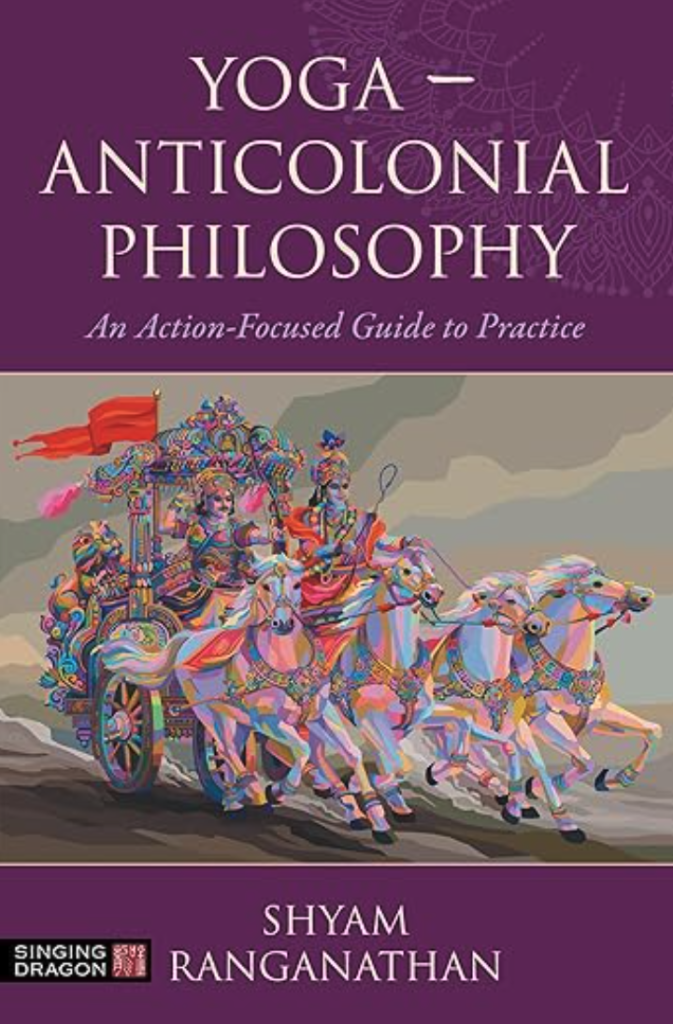
My work began in academic philosophy. Over time, however, the focus of that work shifted. While my early publications were written for specialist audiences, my most recent books are written for the public, because the questions they address arise well beyond academic settings.
If you read My Story, it may be surprising that I became an author and teacher, let alone a university professor and academic researcher. At one point, I even realized—somewhat uncomfortably—that I had become much of what I once disliked 🤣. Yet much of what I ended up researching and writing about emerged from my own attempts to understand failure, repair, and responsibility. Becoming a teacher was my attempt not to repeat the mistakes of my own teachers, but to retain what was commendable in their pedagogy and to innovate by being extremely explicit about expectations. The work was not separate from life; it was shaped by it.
A central theme running through my publications is the relationship between inquiry and oppression. In many contexts, especially oppressive ones, standards are inverted: what cannot be justified is enforced as unquestionable, while genuine inquiry is dismissed as irresponsible or illegitimate. Much of my research has been devoted to identifying how this inversion operates and what it displaces.
One recent book, Life After Death (co-authored with four other philosophers), sits somewhat apart from this trajectory. I was drawn to the topic not to correct a technical literature, but because it is a deeply personal question that philosophy can address without mystification. I argue that life after death is not a supernatural possibility, but an ordinary feature of living: throughout life, one state of affairs passes away and another takes its place. Understanding ourselves normatively—rather than merely as collections of facts—is essential for responsibility, continuity, and the futures we choose to inherit. On this account, relationships need not end with death.

ACADEMIC WORK
Since 2007 when I defended my PhD, I’ve had teaching, professorial, and research roles at the University of Toronto and more consistently at York University (Toronto) in the Department of Philosophy and York Centre for Asian Research.